Poor Eminem... what made him history's most respected white rapper? Well, if nothing else, I think people admired his conviction. He tried so hard to get that street cred, and the simple fact is that you can sense that under all the image, there's a dorky kid so eager to please that he realises that 'pleasing' can sometimes mean talking violent, degrading trash. Whatever it takes, right? There's that famous picture circling the internet of Marshall Mathers III in high school... that geek is still there. That's what makes him other than hateful.
That and the fact that, I begrudgingly admit, the man has a way with a song. He is a good rapper, and he has a good pop sense for a 'hook'. He's put out quite a few songs that are enjoyable to listen to, whether or not you pay attention to lyrics, that it's easy to forget how much run-of-the-mill stuff he's pumped out.
"Ass Like That" is neither. He's a puppet in the video, driving home the point that it's all a big cartoon, but that's no mitigation: I don't listen to the Teletubbies either. This is a load of silly nonsense spoken in a ridiculous accent. It seems beside the point to complain that this is misogynistic: you get the impression Eminem would wear such a criticism as a badge of honour. But it's meant to be a comedy track, and it's just not funny. That's what's saddest about the song. It feels like a desperate attempt at a 'party anthem', but it's just too pathetic to do the job. And of course, we get to the line "you make my pee-pee go da-doing doing doing", presumably onomatopoeia for an erection. Er... well, whatever. He plays with a slinky at one point. Er... well, whatever. There's lots of references to police and to urination. It's all... sigh. It's just sad, really.
Eminem seems to be attempting a comeback. We'll see if he can make it work. because songs like this pushed his expiration date forward way more than it needed to be.
I don't expect to make many friends with this statement, but I have a hard time stomaching The Doors. Actually, I should qualify that: frequently, the three instrumentalists in the band are capable of pumping out decent music. It's precisely 25% of the membership of the band that I have trouble stomaching.
But before making it personal, let me add this caveat: the Doors did some good stuff. And I even mean with decent vocals. The dichotomy of the Doors, or one of several, is how they tried to be an AM band and an FM band at the same time: a pop band and a rock band. So pretty much every album released during Jim Morrison's life has a song or two that's two and a half minutes long and a song or two that's ten minutes long. The Short ones were the singles for the kids, the long ones were the 'statements' for the musos. "Light My Fire" was both. Give me the choice, though, and I'll take "Break On Through", "Love Me Two Times" and especially "Touch Me" any time. The longer stuff? I must just not be doing the right drugs.
The present song is a good example: this is the sort of song where everything goes wrong for the Doors. While the first minute or two build up a decently spooky musical feel, it quickly degenerates into noodly pretension. The musicians here are just as guilty as the singer: as the song goes on and on and on in an attempt to 'blow minds', it loses all sense of musicality and enjoyment value. It has ultimately become a suitable backdrop for...
Ugh. Jim Morrison. His grave in Paris has constant pilgrims, university kids put his poster on their dorm walls, he's mentioned in the same breath as undisputed 1960s greats. Why, I ask you, why? At his worst, or even at anything less than his best, I find him a fatuous quasi-profound blowhard. Gripping his mic to intone the tackiest of high-school 'poetry' in a heavy-handed baritone, the so-called 'Lizard King' is largely responsible for bringing pretense into popular music - for taking the formalistic advances spearheaded by the likes of Bob Dylan and leading them far outside the boundaries of good taste. For all his rubbish about the 'doors of perception', I've never gotten the impression that Jim Morrison had much in the way of worthwhile insights or vision. At best, he was partially able to crib ideas from minds brighter than his.
This particular song is a good example. At first, it's just some typical death-babbling. Ride the snake to the lake, etc. etc. After the song gets wibblier, Morrison does too, telling an incomprehensible story about a killer, with the famous 'Oedipus' lines tossed in there for no clear reason I can see. And ooh, big deal, swear words (sometimes). Yawn. It doesn't make any sense, which is no crime in and of itself, but like any of Morrison's more belaboured 'poetry' pieces, it is convinced of its own merits. It is quite wrong.
And it's twelve minutes long. Twelve minutes of your life you can never get back. Never.
There's a special corner reserved in hell for the music of Billy Joel. I will accede that in his forty-year career he's put out, oh, five or six songs that are all right (just to prove my taste is suspect at times, I have a soft spot in my heart for “Allentown”). But there's also been a handful of songs so dire, so evil, so filled with hatred for the joy that music can bring you... that it defies description. With time, this blog will feature a good number of songs by this man.
Where to start? Well, for the truly vile, there is the song that I ultimately chose. This shopping-list harangue shows up on a good number of 'worst song ever' lists for good reason. Ostensibly, Billy Joel was annoyed by the fact that his generation, the Baby Boomers, were being blamed for, well, for their wholescale raping of the planet and their blatant selling out of everything their generation was supposed to stand for (I'd like to add to that list their monopolisation of western culture far beyond the expiration of their collective creativity or relevance). Apparently he set out to defend his generation by shouting tunelessly for several minutes. “It's one of the worst melodies I've ever written,” he concedes, showing a remarkable degree of self-awareness. He's not on record as having anything to say about that toe-curling moment when hea pproaches the end of a verse bellows out, “JFK... blown away... what else do I have to say?” The most frustrating thing about his apparent assertion that, after crudely describing Kennedy's assassination, there is nothing else to say is that nonetheless he keeps on gibbering anyway.
Billy Joel is under the apparent belief that a list of newspaper headlines from across the decades constitutes meaningful lyrics. And, speaking of what I said above regarding expiration of boomers' creative relevance, he couches all of this in one of the worst musical genres out there: '70s artists trying to make their music sound current in the 80s'. It is my personal belief that the reason 80s music is so maligned by so many is because anyone who was making music in the early- to mid-1970s, suddenly by 1982 or so decided to suck, by using huge drums, squeaky guitars and cheesy synths (and of course the dreaded 80s saxophone) to cover up the deficit of tune or meaning in their efforts.
History teachers, boomers themselves convinced of the historical merit of their own lifespans, actually spent several years foisting this nonsense on schoolchildren, under the mistaken belief that real, significant acts of history reduced to sound-bite lists would make history more enjoyable for them.
The truth, of course, is that we now have a full generation of kids who have developed a knee-jerk revulsion of the subject of history. Those who forget their history are doomed to hold Billy Joel culpable for it.
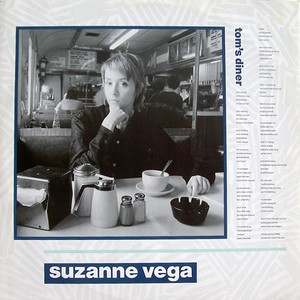
Is it really possible for an artist to release one of the worst songs in the world and one of the best songs in the world on the same album – in fact, back-to-back as the first two tracks? Well, if you're a New York folkie, undeniably talented yet sadly precious, clever yet too-clever-by-half, sensitive and senseless, it's possible. In short, if you're Suzanne Vega, it's possible.
A few years after the original, this song was transformed into a thing of beauty by a pair of British DJs, who put the vocals over the infamous Soul II Soul beat, with atmospheric synth noises and what sounds like a guitar, taking her adlib at the end and making it into a chorus. In short, this masterful reinvention stripped the song of everything – well, almost everything – that was annoying, and gave it what it so direly needed: songcraft.
The original is as pretentious as it is ridiculous. Completely a capella, solo without even an echo for accompaniment, with awkward silences between verses, it's a nursery-rhyme melody over which Suzanne Vega does nothing more than describe buying a coffe in a café. There's no poetry, no symbolism, no hidden meanings. Songs don't have to rhyme, but in the absense of anything else that would indicate it took her longer than two minutes and nine seconds to compose the song, a rhyme or two would be nice. It really does give the impression of someone pressing record onto a cassette player and singing whatever thoughts come into their heads.
Yet most people, upon doing that, wouldn't release it on A&M as the opening track of an album, put it out as a single (!) and make a video for it (just as low-tech and tossed-off). “Must try harder”, read countless high school report cards. I concur. If this is all you need to do to get released on a major record label...
I mean, obviously this isn't the song that got her signed (it's her second album). And she's quite capable of genius, nowhere more evident than on Solitude Standing itself, after this atrocity fades out and the next song begins. But 'quirkiness' is all well and good, but having no idea which of the material that you produce is worthy and which is just pretentious silliness is a big problem. One that all the coffee and newspapers in the world can't solve.
It's in the history books now: there were two Elvis Presleys: the sexy young revolutionary in black leather, and the washed-up overweight hack in white jumpsuits. The stamps tell the whole story, right? What else is there to add?
Except that I disagree with this assessment entirely. On the one hand, I think Elvis was brilliant in the seventies. In an entirely unironic way, I love the huge emotion-filled music he pumped out in Vegas: blues in emotion if not in musical content, belted out with edges roughened from years of experience. And on the other hand, a lot of that pre-army stuff that's so uncritically adored these days... well, perhaps familiarity breeds content, but a lot of it does nothing for me. "Hound Dog"? Come on, really - 'you ain't never caught a rabbit...'? Hysterical nonsense, really. And to my ears, that song's a-side "Don't be Cruel" (the double-hit single was Billboard's highest-charting song for decades, until Whitney Houston) seems to my ears to be exactly the kind of insincere bop-bop-shoo-bop that 'revolutions' are meant to do away with.
And of course, as the keen observer will note, between the 50s and the 70s, there was an entire decade. The very decade that the public record (written by people who were young in the sixties) tells us was the most important in American youth culture in history. The decade of the Beatles. Of the Rolling Stones. Of Bob Dylan. The decade when Elvis pumped out some twenty-odd flimsy musical comedy films, with poor acting and interchangeable songs.
Elvis's movie years bring out nothing but anger in many people, and for good reason: to think that while the music he loved and by some definitions 'created' was undergoing such radical transformations, his management kept him entirely removed from youth culture and anything approaching passion or art, preferring instead to let him rot in the Hollywood star system, making movies that everyone involved knew were garbage. Colonel Tom Parker, his manager, has been rightfully excoriated for his many bad management decisions during Elvis's life, of which this one is arguably the worst (barring sending him on a concert tour in the final months of his life when he was clearly ill and in need of rest and medical attention).
However... you could make the point that only in retrospect can we see what a poor choice this was. You could argue that there was no handbook on how to let rock 'n' roll stars age gracefully, that going into movies was the tried-and-true step forward for teen idols from Bing Crosby on. You could certainly point out that, while Elvis might have been stuck in a treadmill lacking in artistic reward, at least he still had a career in the 1960s, something almost none of his 50s rock 'n' roll colleagues could say. Crap movie soundtracks sold by the shedload; studio albums faltered on the charts. How could 'the Colonel' have been expected to behave differently?
But the mere fact is that Elvis was a singer, not an actor. Music was the only real thing he cared about, and the only real thing he was good at. As we saw in the 1970s, Elvis had an almost peerless ability to wring out whatever emotion could be found in even the most hackneyed of lyrics, if his heart was in it. He was no songwriter, but as an interpreter, he was second to none. Elvis may not really be the 'king' of anything. He may be suspect in the story of music and race relations. He may not truly be the revolutionary Sony BMG would so dearly love you to believe. But he was great. When they let him be.
So what is this garbage? What's so damning about the musicals, what's so depressing about the way Elvis was forced to piss away the years that could have been his artistic triumph, is how bad the songs are. Elvis could still latch onto a good song and make it into a great one, given the opportunity: "Can't Help Falling in Love" and "Return to Sender" were both film songs, for example. But the Colonel had no musical taste or shame whatsoever, and the songs presented for these movies were churned out by hack writers signed to Elvis's own publishing houses, working on the cheap at breakneck pace. They couldn't really be anything but hackwork, and when forced to accommodate the needs of some asinine plot, became as hateful as the present song, which Elvis apparently got so angry recording that he stormed out of the recording studio.
Though many musical teams worked for Elvis's publishers, and while the trio of Giant / Baum / Kaye tend to be the most readily condemned, it seems to me that by far the worst offenders were Sid Tepper and Roy C. Bennett, who in addition to the present hateful piece of garbage provided Elvis with song titles of which the following are a mere selection: "Song of the Shrimp", "The Bullfighter was a Lady", "Wheels on my Heels", "Fort Lauderdale Chamber of Commerce", and "Five Sleepy Heads". To present someone as great and talented as Elvis with nonsense like that is to perpetrate an insult the likes of which few have attempted.
I said that the Colonel couldn't have known... of course, I'm merely playing the devil's advocate. Anyone with a modicum of musical knowledge could have, should have, seen that garbage such as this was antithetical to everything Elvis was, or at least could have been. To misunderstand your client's talent so spectacularly takes a tin ear and thick head of colossal size.
But don't take it from me. This crap came out on the Frankie and Johnny soundtrack in 1966, the year of Revolver and of Blonde on Blonde. On the topic of Bob Dylan... two months after the release of this album, Elvis was in the studio cutting a cover of a Bob Dylan song, as a mere 'bonus track' for a soundtrack album for some other revolting flick that featured too few movie songs to stand on its own. It was 'Tomorrow is a Long Time', and I provide a YouTube link to it here. I defy you to listen to the stately, mature beauty of this rendering and not fume in anger at the stolen legacy that the years 1963 - 1968 could have been, had they been filled with songs like that instead of songs like this.
While Madonna's musical instincts are, by and large, unimpeachable, and while it would be silly to pretend she has not made a real, tangible contribution to popular music, great in her own way, this song is widely reviled, and for good reason too. Madonna's reinvention at the turn of the century was inspiring. The electronic textures of the Ray of Light album were uplifting and rave-inspired, the more radical cut-ups of Music just as challenging and commercially successful. It was perhaps getting too old when she followed up that album with "Die Another Day", an ultimately empty Bond theme and tired variation of the Music sonic template.
But then there was this... when it came out, it was shrouded in nonsense about the war theme of the video, and whether or not it was a political statement about Bush, about Iraq, about militarism, etc. But this hides the fact that the song itself is not about Iraq at all. It's merely the navel-gazing of a celebrity who appears to have problems being satisfied despite all of her material wealth. I wonder if she was surprised that the hoi polloi was unable to related to her pain.
Perhaps she was, and decided to inflict some pain on her audience herself, by... gulp... rapping. Well, if that's what you want to call it. I think Rodney Dangerfield did a more respectable and authentic take on rap, but then again, that was novelty music, and this? Well, I think we can learn all we need to know about Madonna the rapper, or rather the composer of rap lyrics, by scanning the rhyme scheme: latte, shotty (?), body, Cooper, super-duper, trooper, Pilates, hotties, bodies, isotopes, dope, hope. I kid you not. If that's not bad enough, check out the next couplet, which I'm compelled to include in full:
I got a lawyer and a manager, an agent and a chef
Three nannies, an assistant and a driver and a jet
A trainer and a butler and a bodyguard or five
A gardener and a stylist, do you think I'm satisfied?
While Madonna happened to be going through a Monk-who-Sold-his-Ferrari phase of spiritual compensation for the emptiness of material goods, and while the Buddha himself found enlightenment only after years in the lap of luxury, I find it tough not to react to those lines with disgust. Disgust at Madonna's contempt for those less privileged than her.
Musically, it's a rather annoying mix of sqeaky synths and acoustic guitars, produced once again by Mirwais with diminishing returns. It's not overly funky or danceable, even though it was a #1 on the dance charts (it was much more of a bomb on the main pop charts, though). And Madonna herself clearly knew how much she'd overshot her target, too, as she gave the American Life album modest promotion before disappearing, and regrouping with the rather wonderful ABBA-sampling "Hung Up". Mirwais was nowhere to be seen. And neither was Madonna the rapper.
Spin Magazine called it the most influential album ever. It was #13 on Rolling Stone's list of greatest albums. Alan Cross put it on top of his lst of classic alternative albums. Allmusic gives it five stars in five. Your aging hipster uncle, that sneering know-it-all who works at the local record store, and that pimply 'indie kid' at your high school all call it a perfect album.
There's no denying it, really: The Velvet Underground & Nico is one of the greatest albums ever. Don't even pretend to disagree; it's not up for debate. Fall in line! Praise this album. Don't bother to listen to it, though. Or if you do, just listen to the first half or so. In fact, listen to the first nine tracks. That'll do.
You see, the simple fact is that this classic album ends with two ear-bleedingly horrible tracks. Actually, 'European Son' is only very bad. But this one, which precedes it, is truly, truly annoying: Lou Reed babbling in his most hectoring of voices while John Cale tunelessly squeaks on that damned viola.
And that, to me, raises an important question: how can an album rank so high on so many lists if it contains a song as bad as this? Surely, one bad song doesn't detract from a 'good album'. But in the rarified air of critical adoration this album receives, surely a bad song matters. Let me put it this way: there is not a single song on Céline Dion's 30-million-selling, critially reviled Let's Talk About Love album as bad as 'The Black Angel's Death Song'. I would dare anyone who disagrees with me to find one.
It's not that I have something against experimentation. While I do feel that, largely, this album is at its best when it experiments with long-established song convention (my favourite songs on it all have verses and choruses, and perhaps even middle eights, and relatively classic chord sequences too), I can dig some of the moderately out-thre stuff too - say, 'All Tomorrow's Parties' or the adrenaline-rush 'Heroin'. There is definitely some great material on this album.
But I can't ride this train all the way to the end. I can't pretend it's a perfect album when it gets as deliberately annoying as this track, whose lyrics are, as far as I can tell, vaguely menacing semi-meaningful stream-of-consciousness talk about 'choosing'.
And it has, in place of a chorus or an instrumental solo, serving to break up the monopoly, someone going 'tchhhhh' really loudly into a microphone a few times. Wow. No wonder critics love this album so.
There are bands who don't move forward or change their style or content in any way at all. There are career trajectories that follow logical steps forward. And then there are the Beastie Boys. Punk to frat-rap to radical groundbreaking hip-hop in just a few scant years is so impressive that the fact that they've gone nowhere ever since doesn't really even matter. Paul's Boutique remains one of the most truly jaw-dropping albums out there, an amazing thing where every five seconds provides a new sonic surprise. So it's even more of a surprise - one might say a shock - that that album immediately follows up something as lame and embarrassing as Licensed to Ill.
Time has not been kind to Licensed to Ill, for the very fact that it's a bad album not wirthy of kindness. To say something good in its favour, the rolling rock-and-roll beats are frequently quite good. The whiny, nasal rapping and childish lyrics of the three 'boys', however, I can say very little about.
At the moment, I don't have to. This song contains neither: neither big beats nor rapping. In their place, we get the dinkiest of Casio drumbeats and, be still my stomach, sung vocals. I'd like to discuss the crap lyrics, but I'd barely even need to. The lyrics could be the most profound of poetry, and this song, anchored by a deliberately cheesy video-game keyboard and a vocal bassline, would still suck.
So the fact that the 'where's my rhyming dictionary?' lyrics tell a boring story about sexual rejection before getting into a deliberately button-pushing sexist 'chorus' doesn't even matter much, because criticising them just inspires the frat-boy man-child 'defiance' that allows young white males of privilege to act as boorish as they want and pretend that it's in some way a challenge to authority, or the powers-that-be, or 'the system', or their parents who wouldn't let them stay out late or buy them a car, or whatever the hell it is that perpetuates this kind of behaviour.
That the Beastie Boys themselves are just as repelled by this kind of boorishness as I am in some way redeems them in my eyes (as does the fact that they made a great album after this). But they saw the light after raking in the big bucks parading on stage with giant dildos cranking out garbage like this and daring people to call them out as the whiny brats they were.
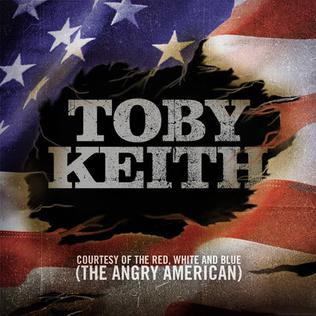
Everything that is wrong with conservatism, in a single package. I recognise that a lot of Americans felt a need to respond in some meaningful way to what happened on September 11. Some people expressed hurt, horror, fear... and, yes, defiance. A lot of people turned to the American flag as, I guess, a kind of comfort. September 11 shocked and devastated me too, as a non-American, just as it did most of the world. It was horrible. It should have been the dawning of a post-nationalist era.
Alas, 'twas not to be. What the world got was George W. Bush putting the sentiments expressed in this song into practice. This is macho belligerence of the ugliest sort, and it mocks the sympathy the world had for the United States by glorifying its insular word-view and proudly displaying its ignorant disregard for the rest of the world.
The key phrase of the song, the one that got the most press, is 'We'll put a boot in your ass – it's the American way'. While some people might claim this is a slightly tongue-in-cheek play-on-words threat against al-Qaeda, I doubt Toby Ketih saw it that way. I think Toby Keith really believes that global dominance and military displays of might are the American Way – the lifestyle he claims his father fought and was wounded for.
A perfectly generic country-rock acoustic/electric lighters-in-the-air stadium anthem, the music is completely irrelevant (excepting the curious bells that show up toward the end). It's all about the lyrics – grunted out over top in the ugliest manner possible. The video is live, as it ought to be, since the song is a jingoistic populist rabble-rouser. Keith sings surrounded by a million flags as the overwhelmingly-white audience pumps their fists in the air and cheers at the ugly taunts, such as “you'll be sorry that you messed with the U.S. of A.”, whipped into just enough of a frenzy to leave the auditorium, verbally attack a few foreigners and vote for their Republican candidate.
And the global image of the USA, the image that was decimated by eight years of George W. Bush, the one that shows America as a bully, as a sabre-rattling, unilateral stain on the face of global solidarity... the image of America not as a 'land of the free' but as a hindrance to world freedom... well, that's the image Keith should be showing alongside all those fluttering flags on the monitors behind him. Because that's what he's a part of. That's what he feeds into and perpetuates.
And I'm absolutely sure he doesn't care in the least.
Why do people try to annoy? I mean, it is clear to all that this song is very, very annoying, right? There is nobody on the planet who could fail to see just how deeply annoying this song is, right?
I'm sorry. It might frustrate me as much as it does because the Black Eyed Peas are not talentless hacks. In fact, they started out quite promising, and I don't want to suggest that 'it all went pear-shaped when Fergie joined'. I don't think she bears the blame for the Black Eyed Peas' disturbing transformation from a hip sub-Fugees (or sub-A Tribe Called Quest, pre-Fergie) into a sales-at-any-cost pop juggernaut. I'm more tempted to blame will.i.am, and the limited scope of his ambition.
This song is an ode to Fergie's breasts and buttocks. Or, as will.i.am puts it, 'all that junk in (her) trunk'. Fergie is a relatively pretty girl, I guess. But singing about your 'lady parts' is really no way to impress any of the fellas that I know. It's tacky and crude. It might have been exempt from such an analysis if it exhibited a sense of self-deprecating humour. But alas, no. or if it does, perhaps I don't get the joke. Instead, it's bravado about how her body (and what kind of word is 'humps' or 'lady lumps' to describe body parts?) makes men spend money on her. A truly icky set of self-congratulatory lyrics that somehow failed to repulse people: disturbingly, this song was their breakthrough hit, as opposed to any of the more accomplished singles that preceded it. Was it the power of the musical accompaniment that made people overlook the lyrics? It's tough to imagine: Fergie's vocals have the cadence of a jump-rope rhyme, and the music is the most basic of Casio beats with a simple five-note melodic tag line every now and then. Just enough to keep the focus on the lyrics. Which are as inane as they are offensive.
I do like Guns 'n' Roses. There's a fair amount of their songs that I find listenable, and even a couple that I find enjoyable. It was a long time coming... when they were popular, when “Appetite for Destruction” was on turntables everywhere, I resisted. Crap heavy metal, I said. It took me years to wake up to thjeir genuine pleasures and to the fact that they are examples of a rather rare beast indeed: non-crap heavy metal.
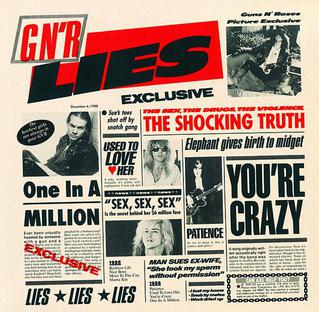
But crap marketing ploys? GnR had 'em. Including the 'between albums EP', the quick and painless project hastily thrown together to keep the artist in the public eye while the artist is 'recuperating' or in some other way dormant. In this particular case, the EP in question, at 33 minutes longer than some albums, was thrown together by taking an older live EP and tacking four new acoustic songs on. 'Guns 'n Roses Unplugged' without the need to enter MTV's studios. The heavy metal acoustic ballad is a wildly erratic mini-genre, with a few excellent songs mixed in with a lot of tripe, but it sells gold and gives heavy metal dudes plenty of opportunity to seem sensitive for heavy metal chicks. The gold standard here is 'Patience', a rather pretty song not entirely destroyed by the horrors of on-record whistling.
But the remainder? Well, there's the allegedly funny homicidal 'Used to Love Her', and the present song. What about the present song? Well, let's put aside the endless apologies, justifications and explanations Axl Rose has given for it (including on the CD cover itself). Let's just stick for the moment with the lyrics themselves, and their attacks against black people, gay people and immigrants. (Police officers, too). Taken at face value, it's a screed against anyone different than Rose, blaming minorities for all kinds of things. It's an incredibly ugly bigoted tirade, and amazing to think it could have gotten as far as record stores without anyone stopping and saying, 'wait, what are we condoning here?' There's nothing good or bad to say about the music – it's quite irrelevant compared to the ugly vitriol Axl Rose spouts in an especially annoying shriek (and no ballad, either: it's rather uptempo).
And here's the thing: you can justify throwing around bigoted slurs all you like – you can defend your usage of the 'n' word by saying 'context matters'. You can defend your usage of the 'f' word by saying you respect a lot of gay people. You can claim to be playing a character. You can twist your face-value-ugly words into any direction you want, really – but when your fans are, by and large, white, straight and American-born, all you're doing is playing into their hands. All a homophobe takes from the song is 'Yay! Axl Rose is one of us!' All a racist hears is sympathy and a sense that his opinions are shared by others (even though the lyrics also make some vague repudiation of 'racists' that I don't really understand, while calling their singer a 'small town white boy').
The fact that Slash himself is black, and plays guitar on this song, only furthers my confusion about why it got made. Apparently he voiced his concerns, but still went ahead and allowed the song to be released. That makes no sense to me.
I've viewed a lot of 'worst songs ever' lists online and am surprised by how often I find "Ice Ice Baby" on the list. Surprised because in my opinion it's not half bad a song. I mean, it'll never make anyone's top ten, but it's hardly abhorrent. What I think is happening is that people are quite rightly condemning Robert Van Winkle, the charlatan responsible for the song under the name Vanilla Ice, and in so doing pointing their fingers at his most well-known song. But terrible acts can make good (or at least half-decent) songs, and to deny that is to pretend that Milli Vanilli's fall from grace in some way affects what a great song "Blame it on the Rain" is. Silliness.
Or look at it this way: Robert Van Winkle (I just love that name) has a discography of seven albums or more (several of which are in the 'nu-metal' genre, whatever that is). All of these albums are filled with music just as dire as your gut instinct tells you it must be. There's a very good chance that "Ice Ice Baby" is actually the best thing Van Winkle has ever done. So how can it show up on 'worst ever' lists, unless the lists devote themselves entirely to the Vanilla Ice oeuvre? (One album is attributed, hilariously, to "V-Ice".)
For truly dire, though, we need not go very far. "To the Extreme", Vanilla Ice's major label debut and home to that Queen-smapling track, contains the present song, "I Love You", a truly limp attempt at a romantic love ballad. Before listening to the two back to back, I was ready to describe this song as a weak take on LL Cool J's "I Need Love". The truth is, though, that the rather embarrassing "I Need Love" is still way better than this piece of work, which features back-up singers crooning random words from the lyrics, a cheesy drum machine beat, enough saxophone to shake a stick at (this song came out in 1990 but is a perfect example of the 1980s tendency to stick saxophones onto cheesy songs just to underline their cheesiness), and the piece de resistance: Vanilla Ice rapping in a whisper the shockingly pedestrian lyrics to this pathetic love-man ditty. I used the word 'limp' before, and I think it's the perfect word to describe this song: incredibly, disturbingly limp, and an embarrassment to anyone by any standards: so bad, and stop to marvel at this for a second, that it could even be seen as an embarrassment to Vanilla Ice's career. Just how bad is that?
Well, I've already talked about the aesthetic tragedy that is the 'charity single'. Just to underline the message I feel compelled to repeat again and again, charity singles are for very good causes and are definitely worthwhile things to do. I certainly don't want anyone to think that I'm being callous about charity or about disaster relief, and I certainly don't want anyone to think I'm being callous about the 2010 earthquake in Haiti, which affected me very deeply and still continues to.
...but this record sucks. Big time. I refer, of course, to the new version of "We Are the World" which was cobbled together to aid Haiti a few weeks ago. Any cent to help Haiti is well spent, so anyone who is spending money on this particular horrorshow is doing a good thing. But one of my particular pet peeves of charity recordings, the artists' sense of self-importance, is on display in this recording (and its YouTube video) in nearly intolerable levels. These artists are so hung up on the world of good they'll be doing their careers - I mean, doing the people of Haiti - that they lose all sense of subtlety. The result is something so artificial, so faceless and corporate, that any sense of collectivity and altruism is just blasted away.
How does it compare to the original? Well, to its credit it gives no one the job of 'singing Michael Jackson's lines', which would be an obvious disaster waiting to happen. Instead, Michael Jackson suddenly appears out of nowhere, white gloved, and singing with a bunch of people 25 years removed from him. Shrug. Whatever. The single most hilarious moment is when Cyndi Lauper's lines are taken over by Celine Dion - shrill in a lovable way replaces by shrill in a, well, shrill way. Celine Dion is so removed from the joke that she wouldn't even recognise it if she saw it. The autotune is, of course, hilarious. And the rap addendum is on one hand a necessary update to reflect what's popular now (and was popular but more easily ignorable 25 years ago) but on the other hand completely horrible: a bunch of male voices (mostly old enough to have just missed the first "WATW", mind you) engaged in some slow-tempo mass chanting pretending to be rap. Wyclef, candidate for beatification after the past few months (I mean that sincerely; the guy is awesome), embarrasses himself in front of the mic a few times, Jamie Foxx rather ridiculously sings his lines as Ray Charles, the whole mess gets going with Justin Bieber of all people (presumably to give Miley Cyrus and the Jonas Brothers credibility), Vince Vaughn, Jeff Bridges and Nicole Richie are present, for no discernible reason (save nepotism), and everyone keeps clutching their headphones. Like, incessantly.
The whole thing will hopefully earn squillions of dollars for Haiti. The website is world25.org, where you can donate a truly worthy cause. But once you've spent your money, ruminate on how better off the world would be if this particular group of self-important musicians had not gotten together...
I have to admit it: I just don't get Janis Joplin. I mean I don't see what the big deal is. I know she died at 27, and there's a great mythologising to those who died young, but 'an early death' doesn't show up in the recorded output of any of those musicians, so what you're left with is the recorded output made during their lifetime (excepting 2Pac, of course, who has been much more prolific in death than he ever was in life). In many cases, this is pretty scant.
Here's where I'll go with Janis Joplin: she does a good job on Kris Kristofferson's "Me and Bobby McGee". What do I like about it? Well, for starters, it's understated. Which Janis Joplin otherwise never is. Most of her most 'classic' perfomances strike me as oversinging of the highest order, a person mistaking screeching for soul.
And then there's this: in a sense Pearl is Janis Joplin's only really realised album, since her discography is otherwise two albums with Big Brother and the Holding Company and her generally ignored solo début. Even at that, though, Pearl is famously not fully realised, because she died before she could finish it. The present track, for instance, was recorded only three days before her death. Spooky, I guess, if you go for that sort of thing, but perhaps if she'd survived, she'd have pointed out that this a capella nightmare is little more than a silly joke sung in an annoying voice.
Perhaps not - I don't know. The mythology that surrounds Janis Joplin, that tends to glorify every grunt that came from her mouth, would have you believe that this song was intended as a satire on commercialism, and thus a 'major statement' - worthy of placement immediately after "Me and Bobby McGee". But the fact that she died three days after recording it and never had a chance to decide what her album should look like means that ultimately it was record producers who decided to put it on the album. Since they didn't have enough material to make a proper album... a knock-off, years before CD rereleases made such album-filling knock-offs the norm. One of her greatest hits? Well, that'd be an embarrassment if it were any other recording career. In the present case..., I guess it is one of her greatest hits.
At the time of its release, a lot of discussion regarding this song focused on its lyrics. More to the point, discussion focused on the nature of the politics of the lyrics and, by extension, Springsteen’s own personal politics. It was the ugly eighties, the peak of the Reagan era – in fact, it was an election year, an election that Reagan would win with a huge landslide.
“Ah, the song just sounds like empty jingoism,” claimed the lefties. “Actually it’s a cleverly disguised criticism of American foreign policy, i.e. the Vietnam War. Why, it’s practically a modern-day ‘This Land is Your Land’.”
Perhaps. But a few points: 1. “This Land is Your Land” also sucks. 2. Cleverly disguising your sedition doesn’t mean much if you’ve disguised it to the point that 80% of your listening audience misinterpret it. 3. The song may not actually be empty jingoism, but those booming drums and those throaty vocals evoke empty jingoism pretty darn successfully.
Anyway, what the left and the right can both agree on, I think, is that “Born in the U.S.A.” is a six-note fanfare repeated over and over and over and over, intro and verse and chorus all alike, over and over and over over those booming drums. A chorus that consists of the title shouted over that damn six-note melody over and over again. It’s not a song; it’s a marching tune. The best performance if it ever, in my opinion, is in the movie "Canadian Bacon", where John Candy and his American compatriots attempt to drum up a feeling of national spirit by singing the song, until it breaks down due to its incredibly repetitive inanity.
Good politics on a bad song does not lead to good music. Bruce Springsteen is capable of greatness. Often, even. But not here. So of course it’s his best-known song. Sigh.
Rolling Stone magazine calls it the 275th 'greatest song of all time'. The RIAA call it the 59th 'song of the century' (referring, naturally, to last century). This song very definitely has critical acclaim. I just couldn't, for the life of me, understand why.
I'm not really sure, within the scope of this ongoing list, how quite to deal with 'novelty songs'. See, novelty songs gain a kind of immunity from the hostility they should otherwise engender merely by the fact of their being 'novelty songs'. The thing is that you can't decry a song as annoying when it doesn't aspire to be anything more than annoying - though for the life of me I can't understand why anyone would voluntarily listen to it. Thus, you'll not find a song like "Witch Doctor" or "Eensy Weensy Teeny Weeny Yellow Polka-Dot Bikini" on this list, deserving though those two example undoubtedly are. It seems like flogging a dead horse to describe those songs as 'terrible'. It seems to be the point.
And I'm certainly not opposed to humour belonging in music (as Frank Zappa might have put it). I like songs that make me laugh. It's just that so-called 'novelty songs' rarely do make me laugh, and those that might upon first hearing get old lightning fast as soon as the novelty, so to speak, wears off.
So what of this song? Well, it's the incredibly lecherous Chuck Berry, who apparently created rock and roll before becoming known for breaking the Mann Act with a 14-year-old and for installing video recorders in the ladies' toilets at a restaurant he owned. In between those acts, he decided to prove his class by recording the puerile song under current discussion. Apparently, it's excerpted from what must be an excruciatingly-long eleven minute version recorded live in Coventry on the geographically-challenged The London Chuck Berry Sessions album. Essentially, two bells on a string can be considered a toy called a 'ding-a-ling'. Fine, but the whole track is a one-joke effort built entirely around the following conceit: 'Ding-a-ling' sounds like it could be a code-word for male genitalia, so you can constantly seem to make nudge-nudge-wink-wink references to masturbation while discussing playing with the toy in question. Yay. Funny-ha-ha.
The song has a stubborn inability to go anywhere musically, being a kind of half-hearted knees-up with a childish melody. Berry constantly circumvents whatever momentum the song might accidentally build by trying to get the audience to participate. Which they do - they seem to be having a good time. I guess you had to be there.
Huey Lewis is a special kind of awful. Cheery music for Sunday barbecues is all well and good - music doesn't always have to be about misery or angst or whatever. Music doesn't always have to be personal. Music doesn't always have to be progressive. Empty good-timey 'party' stuff has its place, I suppose. But it's amazing just how devoid of meaning and emotion Huey Lewis truly is. He feels at times like a song-composing computer: the result seems convincing on first glance, but if you look a little deeper it fails the Turing test conclusively.
This is stuff that only the 1980s could have produced. My problem with the 1980s was the sheer veneer of commercialism that was draped over it by people who had nothing to do with me or my life. There were a lot of great things in the 1980s, the decade of my childhood, but there was also a lot of very 'professional', slick product too. Insincerity became a legitimate option on the 1980s. Well, I guess it always was one, but it seemed that you could really run with it then. I don't know what this song has to do with Ronald Reagan and Margaret Thatcher, but it seems to fit with the naked greed and ambition of the era.
Lyrically, this is a very depressing tale of a person who 'used to be a renegade' who now has cut his hair and likes bands in business suits, bizarrely (ska still okay, then). It attempts to call untrendiness trendy, using words from the 1960s that were quaint relics even when this song was released. It takes its yay-for-selling-out tale over a typically Huey Lewis organ-based 'groove' that ultimately descends into a never-ending chant ("Here, there and everywhere"). Then, the whole mess is featured in a video comprised entirely of Huey Lewis and the band members gawking into a kind of fish-eye lens that makes it impossible to look at the screen for more than a minute. It's probably the video, as much as the main sell-out conceit, that gives this song the edge for me over similarly risible Huey Lewis songs "I Want a New Drug" and "The Heart of Rock & Roll".
Seeing that Hall & Oates have, on some level, enjoyed a renaissance recently makes me worry that this dead-and-buried group might enjoy some kind of twisted rebirth as 'kitsch'. But this is not 'kitsch'; this is empty bar-band nonsense written by people with no ambition for greatness for people with no ambition for greatness. It celebrates its emptiness, its vapidity. This makes me very sad.
Though I highly doubt that Huey Lewis was ever a 'renegade' in any way, shape or form, it's shocking to recall that this is the band that provided the musical backing for Elvis Costello's sublime debut album, My Aim is True. How sad to think that such a spiritually empty band once created music with vitality.
I had thought of a few things to say about Jimmy Buffet before getting into this song, but it turns out it's not by him at all but by Harry Nilsson instead – which is strange, because it just seems so Jimmy Buffet-esque and not so Harry Nilsson-esque. Well, not that I know much about either performer, except that Nilsson was buddy-buddy with John Lennon. I do know this song, largely due to Quentin Tarantino, who usually has a touch for soundtracking so deft that twenty year old songs instantly and irredeemably 'belong' to the movies he includes them in. “Reservoir Dogs” does this perfectly both with the 'opening song' “Little Green Bag” and with the ear-cutting special “Stuck in the Middle With You” - two songs that, through revisionist history, are now 'from' a movie released decades after the songs themselves were.
And then there's this. Wikipedia reveals that the song was written with only one chord: which makes sense, as everything about is screams monotonous and dull. It is, of course, variations on the sentence 'put the lime in the coconut' plus varying shrieks of 'doctor!' all sung in crap accents and 'voices'. I think it's trying to be clever and 'breezy'. It is, however, at any length, painfully dull garbage that outweighs its welcome before you ever get to the 'now let me get this straight' line.


![Reblog this post [with Zemanta]](https://lh3.googleusercontent.com/blogger_img_proxy/AEn0k_tuKAb_iU7ZDQ6zUhTnaLErUc9Me8DoCiFhhTSvETnljbrYPqqGYTI25mRBe2gDh7weZZcksqSBCtKGKYcSbNc4PCVNw72AZi7LtxYKD3ZyGNMmp64oxSggI2FxU1RmnvyDHDgujaaPIKjaN5UyZHo=s0-d)

![Reblog this post [with Zemanta]](https://lh3.googleusercontent.com/blogger_img_proxy/AEn0k_saDEdDb6ZNnNLkIybuXUbJ1OtM8k8ARhRVy7XTrS4UJeQ6zjOJFsjpbYT8Q0WjfxpIgI5u-QZtNRdlJGkk5kJI7_SHDJFj9ApE3vWNPMThlp3h_J1vc7HhVQ3pN1MtJbqMH_L06hD_x45Pgkg3ClY=s0-d)

![Reblog this post [with Zemanta]](https://lh3.googleusercontent.com/blogger_img_proxy/AEn0k_tIUsAkxOgGZdOyF9bD57eZfQqimGEJi4pL0eJoAZyNGDV5gYaVYhltss-p1-kwaqcFzK4W6XUw3U_EcP2w57jJYalQnyP9TXRWp45V2UQmweKEIBVf__CRCkGPoUPFpkRPRFvJbqrTrs9aXDAP-8eq=s0-d)

![Reblog this post [with Zemanta]](https://lh3.googleusercontent.com/blogger_img_proxy/AEn0k_sI_0CxGgH2R2Pw9uC_kKxZdUGekR7DgW5HQmCYBrno689Q3pniGVxggVTWLRArE9ghtD5zW0RzS6TV9q0R8LQt7OlNmUnF1XZPypp_OxNvUg-1r-DJD-dp79uqi_OmFhBt0O43YSXLZmHXeKKh5bKl=s0-d)

![Reblog this post [with Zemanta]](https://lh3.googleusercontent.com/blogger_img_proxy/AEn0k_uhFlsxCfT4KVO9x2vkxclOJnP9cycgq-HUVDP0ernTpaa01lDrbxHLrDQ1VHMA838Ik2TD238RkIv-KNY5n-pMv5Pc8rKmy_zFa-2SGO3F35tSBOwNq8F7eeOm9NAziN0WIZ5B7Y_xRJuiTtGTPkY=s0-d)
![Reblog this post [with Zemanta]](https://lh3.googleusercontent.com/blogger_img_proxy/AEn0k_s5qDrwpr_-vAhOwUJibaUbWFh9Y2pQo5xxASPMC-WVS8kuKfeE4OOTzjg9V3HUKqqt9F2U_kDgXBYLxPDjLDM3wrHQVbJmMtqrPeDydHWB82odddfGw7WlMZ9LrNyk5efjEpRUNEgUDZMlwTjSCztB=s0-d)

![Reblog this post [with Zemanta]](https://lh3.googleusercontent.com/blogger_img_proxy/AEn0k_uKYsPcdPYgTCvOZMUSM8PEWTwjwJHBpvtKZfIwW5kxD5mTRBauyGs0ZF7oH1-rc2LzLUMVzohGibVHYOtWqBwT0UwW3lVnV7IkQA2CIJcXHIT-5jdJWjBlgbG-ihDzmJxl_mtqgchqILohckwg1xQ=s0-d)
![Reblog this post [with Zemanta]](https://lh3.googleusercontent.com/blogger_img_proxy/AEn0k_vFEKW0RDVcya0kO6rLuO0gtHf3YLny6-89BKGhBowRdCPPHzfHbEbcC3IK00OCyIBM_ES9Dug9PfVFhfRyLH1tk03a0mHf1iJacNxdsy8ca5hEFmMBXayAv4BQHsSd-QdElGJXaXG1VbOF6D_YjKU=s0-d)

![Reblog this post [with Zemanta]](https://lh3.googleusercontent.com/blogger_img_proxy/AEn0k_sMPV6VwExAQkFDl5RiU5tL1wqMe5L1HB8bavijuGLZZLOY7rrNfMMrEcdF4T1DP41yOJTi3V6Uf_QPf_hPC9NIs4wwzIrP6BFK48nVzPhmS824dWAp65IHgb00rffqqjdUg-KWe1vNlLxbLhtuPCRE=s0-d)

![Reblog this post [with Zemanta]](https://lh3.googleusercontent.com/blogger_img_proxy/AEn0k_teQ6sV5rwg__l6_kLlgfssdoU0gynl_OGbyGlzP9GxcHle_JiiiS4OTXH6JoOYEdIE7KNxKhEAFPIEg5aW-9JH4jWgne-WPQwB0oVX-puBklJhrZfNBbWJXQJUMDofm3o9aTVyTQ5JoRH4rp5EB6o=s0-d)

![Reblog this post [with Zemanta]](https://lh3.googleusercontent.com/blogger_img_proxy/AEn0k_sXWJ-C5f6gU_StKCRL2EjAWj-aZ0z2q59KfDj4tQdwRU7NFenHBqI38lp_GTULbqEapOzCkIqsIgiOQVqnpAzfj23VqEr8UbP_2RdOQkYr9GYruB6FEqXhHkPEBz2DPKmUW-zeOtRD3I0iHMs2B2Y=s0-d)

![Reblog this post [with Zemanta]](https://lh3.googleusercontent.com/blogger_img_proxy/AEn0k_sS-qh-ieaVv7tk2TMh3KKG7MuQc0H93fN1-0GhCTIpz3gg3PolnA5N9TtlIVwjjlzY1yPGGlCKuz1rCmx4P6WggxmEbOWYRA-ZmmnhpHqK0Wjiwts7iOmmQY7t5j_l5s7liQchIgIWT6Kjp3w8Grrk=s0-d)

![Reblog this post [with Zemanta]](https://lh3.googleusercontent.com/blogger_img_proxy/AEn0k_vYySSOMviay1mejlzBIOmliHXvClzIEqdGrDDjxD5XIaxMAhJFkpIAgaAWZof0uHpGZCBS45WYn9RaXsvOXB2Z97qvsgEhq_OploirU3bJqetvBsrzTmWklFbPL9oo18PfvpTEEEdXckEfz05B_hJh=s0-d)

![Reblog this post [with Zemanta]](https://lh3.googleusercontent.com/blogger_img_proxy/AEn0k_uFiaJc9fHxVRVVEb0lhfLEG9Uuzc_Eve9CKPuM7meaeZqu45WeI8Gy5fd9RZ826QbQ3Az8x9Ddf_uMK4vmgPMT_kY9BHTHPnlHjxJKUa893neecxf-UrubI8lCbwkN5Gnr9Ev9nzt7xZoI_fT10Q=s0-d)

![Reblog this post [with Zemanta]](https://lh3.googleusercontent.com/blogger_img_proxy/AEn0k_u4JDxCWAT8_jHKDQHGx8w49lBjlnvBb4dA973409d5WutF4Mql5Ql7vhd7eKqaxxIOTtHsWiwI6WbQn8E0S4qLcx_SyCmwoCxB2F2Pw9xV-OR4UBnXQTmklEsJzLyfhNtq7xQQPMR87mqtAphgAf_7=s0-d)